
My Goals for 2026
- Dec 9, 2025
- 5 min read
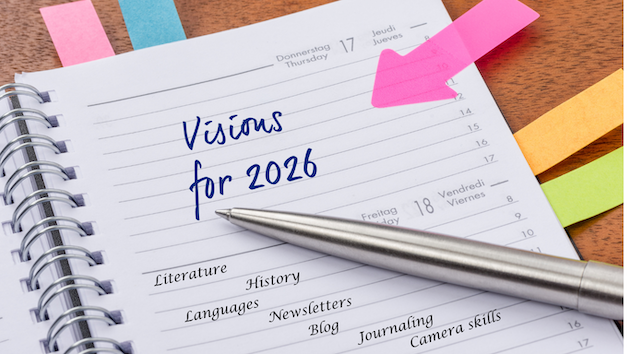
For some time, I have been thinking if I can somehow develop my book blog, which is now more of a newsletter. After 12 years of blogging I feel it is time to change a few things. I recently read a post from Travellin’ Penguin on Getting Ready for 2026 on various things she wants to pursue during the next year. It seems to be the right time to consider new goals. In my last post I talked about joining the 52 Book Club, and that is one of the reading goals I have. But, there are a few other things on my mind.
My Personal Curriculum
I follow quite a few channels on Youtube, and once you start looking for something, there pops up a lot of other videos on the same subject. I don’t know if it is because I was looking for it, or because this is a trend now, but it seems to be popular to make your own personal curriculum. Meaning, you want to learn things, but not necessarily go to school, or university to learn it. Instead you look at the curriculum of classes you are interested in, and add the books, or whatever practical exercises you need to learn more. This is something up my alley, so I started to think of what I would like to learn more about. I am reading quite a lot, but I would like to learn more from my reading. Not just finish a book and then start the next. So what is on my curriculum?

Subjects
I could easily put up 5, 6 or more subjects that I would like to study more, but one has to be realistic, and it seems that three subjects is what you should aim for. I have chosen Literature, History and Languages.
Literature
Of course! Reading is part of my daily life. For a long time I wanted to read more of the classics, going back to Antiquity where it all started. Searching the internet I have found three ages:
Theocratic Age (Foundational work)
Late Medieval and Renaissance - Aristocratic Age
19th Century
To start with the beginning, I have a list of the books from Antiquity, and I started with Hesiod’s Theogony and Works and Days. Theogony is the origin story of the Greek cosmos. The background story of the births of the gods, the rise of Zeus, and the cosmic battles that shaped the world’s order. This is the foundation of later Greek religion and storytelling. Here is where the Greek myths are born. Works and Days tells the story of everyday life. You find practical wisdom, moral lessons, and advice on farming. It is a handbook for living responsibly in a difficult world. Maybe it will even be relevant today?
Now I am on to Pindar’s Complete Odes which honour victors of the ancient Greek games. They praise athletic achievement as well as linking it to divine favour and heroic lineage. It is rich in myth, imagery and moral reflection. I find it a little bit difficult to read.
Simultaneously, I am reading Argonautica by Apollonius of Rhodes. This is a recount on Jasons’ voyage aboard the Argo in search of the Golden Fleece. The story has always fascinated me, although I don’t really know the details. Here we find adventure, heroism but also psychological depth. It is said to be more subtle and literary than Homeric epic. It is a traditional story of a hero’s quest including a little bit of romance. Nothing wrong with that.
History
To make things easier for me, you can say that literature and history are connected. To learn more about history, I have to read literature. That these two subjects are combined should make it easier. I found the following list of what to learn on this subject.
Perspectives: Understand that historical events are interpreted differently by various people.
Continuity and change: Identify what has stayed the same and what has changed over time.
Cause and effect: Analyze the reasons behind historical events and their consequences.
Evidence: Learn to evaluate and use historical evidence to support arguments.
Significance: Determine the importance of specific events, people, and developments.
Contestability: Recognize that historical accounts are open to debate and reinterpretation.
Broad historical periods: Study major eras such as ancient civilizations, the Roman Empire, the medieval world, the Renaissance, the Industrial Revolution, and the modern era, including both World Wars and the Cold War.
Global and national events: Investigate key historical trends and movements, from the rise of early civilizations to the fall of empires and the rise of modern economies and nationalism.
Regional and local history: Learn about your personal, family, and local history, as well as the history of your state or territory.
Thematic studies: Explore specific themes across time, such as the development of politics, social sciences, philosophy, religion, art, and music.
Connections to other fields: Integrate history with other subjects like geography, literature, economics, and politics to gain a more complete understanding.
I have an extensive reading list for literature, but, so far, not so much for history. I am sure there are recommendations to follow, but I have not yet looked for them. Time you know.
Languages
I have chosen three languages, of which I have some knowledge of two of them: French, Russian and all new to me is Classical Greek. I am now studying French and Classical Greek. The latter is very difficult, but I choose the classical version of Greek because I want to be able to read text from ancient stones.
That should keep me busy for 2026. But, I have other ambitions …
Outside the Curriculum
Several of the subjects and goals are intertwined, like my blogg and newsletters. They are connected to the literary part of the curriculum.
I would also like to do more photography, learn my camera better, and use apps to edit the photos.
Journaling is something I have not had time to do. I have a big bunch of memorabilia from my travels, they just have to be put into my journals, which is something I have to do next year. Once I have caught up, I hope to do it more regular as I travel. Not piling up things.
Another thing that will happen in the beginning of next year is a small renovation at home. The biggest one is my office. I will make it into a dark academia theme and hopefully it will be a more pleasant space than it is now. I hope the new room will give me inspiration for writing, reading, blogging and studying. A smaller bedroom renovation and a few other things around the house are also on the plan.
I think next year will not be less busy than this year. I feel good though to have made a plan, to have a structure, and a set of goals. I also have to streamline my various tasks to make them easier to work with. As it is now, I am all over the place. As you might notice on this post?
What about you? Do you have any plans for your blog, reading or whatever you like to do in your spare time?
Brilliant idea, Lisbeth. I never make plans like that but I always love to study more. And some of your goals are fantastic. I would love to learn Russian but I once started Greek (the modern version) on Duolingo and was irritated by constantly having to switch keyboards. I'd be grateful for any tipps. Anyway, have a wonderful 2026 and thanks for visiting my post: https://momobookblog.blogspot.com/2026/01/happy-january.html